

During the early days of the COVID-19 pandemic in 2020, I began building a private Kubernetes test cluster using Raspberry Pi single-board computers. My primary objective was to gain deeper hands-on experience with Kubernetes orchestration, infrastructure automation, and load balancing—while also designing a compact and efficient hardware platform.
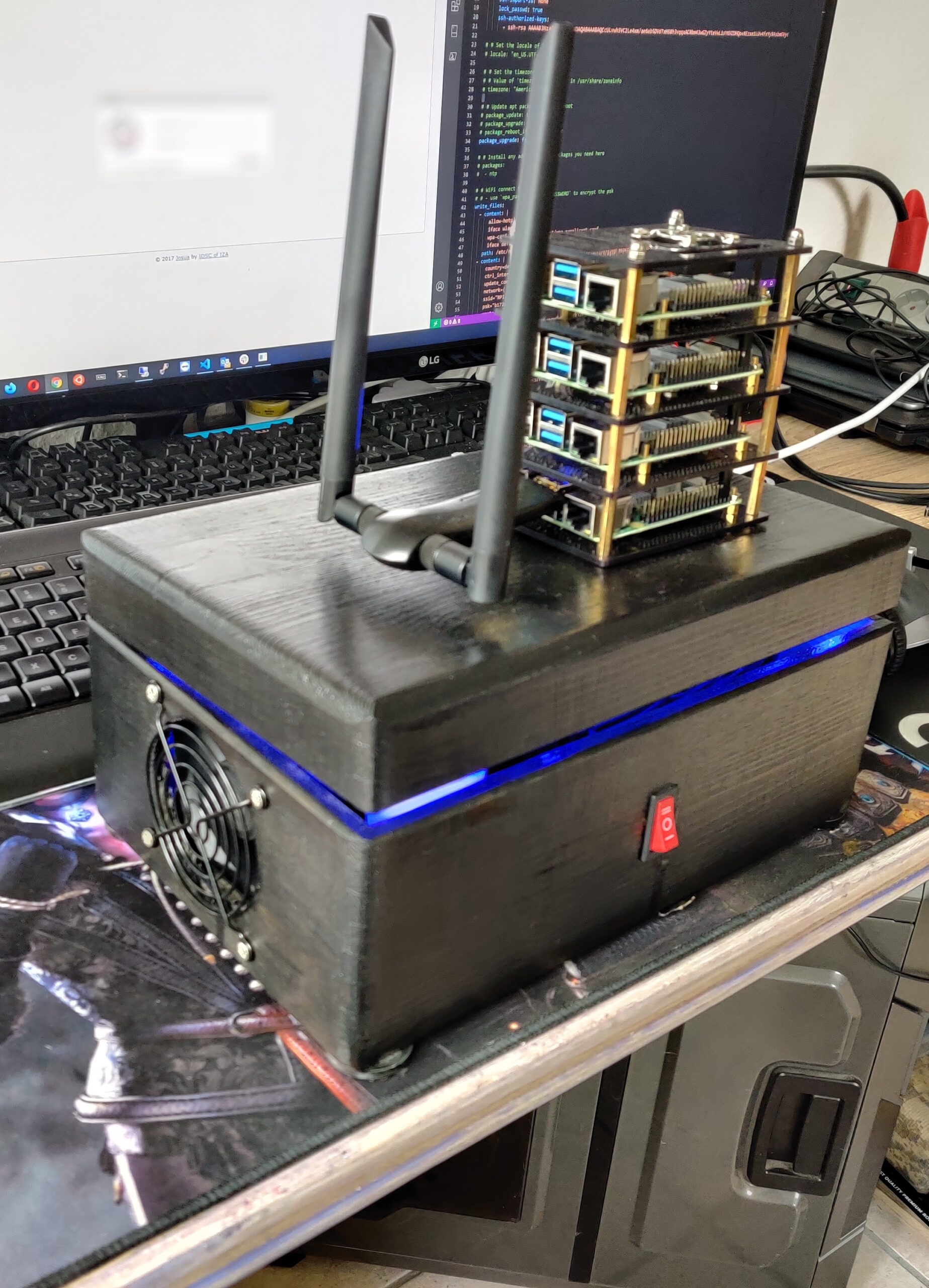
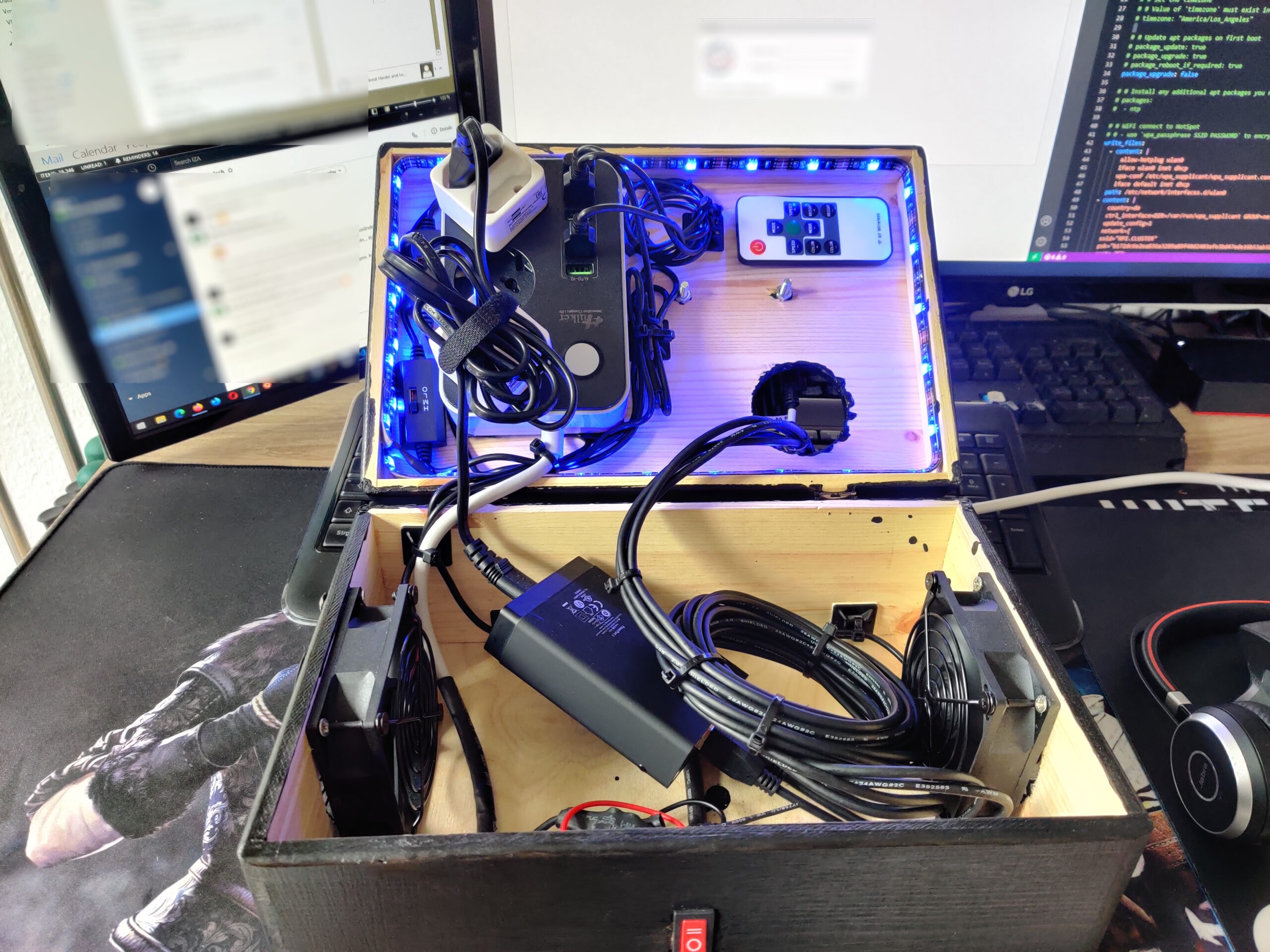
The cluster consists of four Raspberry Pi units:
- 3x Raspberry Pi 4 for running Kubernetes worker nodes and simulating load balancing scenarios.
- 1x Raspberry Pi 4 acting as a bastion host and administrative node.
To improve usability and cable management, I designed and built a custom housing solution. This enclosure features hidden internal wiring, active ventilation, and integrated LED lighting, making the setup both functional and visually appealing. The clean design simplifies maintenance and highlights the internal structure of the cluster in a transparent way, which is also evident in the accompanying images.
To deliberately increase complexity and simulate more realistic edge conditions, the cluster communicates internally via Wi-Fi only, as clearly indicated by the prominent external antennas. This design choice helped me better understand wireless networking challenges within container orchestration environments. Furthermore, the hardware platform is designed to be scalable up to 16 Raspberry Pi nodes, allowing future expansion and more advanced testing scenarios.
The software stack was built upon various open-source tools hosted on GitHub, with a strong focus on:
- Ansible for provisioning and configuration management.
- K3s as a lightweight Kubernetes distribution.
- Custom bash scripts and YAML templates for automation and experimentation.
Although the hardware design was fully custom-built by me, the software side of the project was exploratory—intended to help me evaluate infrastructure-as-code principles and service orchestration at the edge.
This project provided a solid foundation for understanding Kubernetes concepts and helped me identify its strengths and potential use cases. Building on this experience, I attended two advanced Kubernetes workshops to further professionalize my knowledge, with the clear goal of applying it in future production environments.